


Sell-In vs. Sell-Through Video: What's the Difference and Why You Need Both

Toy Industry Marketing Tips

If you make consumer products, you live in two separate worlds: the world of convincing buyers to stock your product, and the world of convincing consumers to buy it. These are completely different selling jobs — and they require different videos.
We call them sell-in and sell-through, and it's a distinction that most video production companies don't even know to make. Understanding the difference could be what separates a successful product launch from a warehouse full of returns.
What Is a Sell-In Video?
A sell-in video is made for retail buyers — the people at Walmart, Target, Amazon, or specialty retailers who decide whether your product gets shelf space or a featured placement. They are watching it in a buying meeting, possibly alongside 20 other vendor pitches that day.
What a sell-in video needs to do:
Communicate the product concept instantly — buyers don't have time to figure it out
Show the market opportunity — why this product, why now, who is buying it
Demonstrate retail-readiness — packaging, price points, seasonal timing
Build confidence — your brand looks credible, your production looks professional
These videos are clean, professional, and often run 60-90 seconds. They prioritize clarity over entertainment. The stakes are high: a weak sell-in presentation can mean zero shelf space before a single consumer ever sees your product.
What Is a Sell-Through Video?
A sell-through video is made for consumers — the parents, grandparents, and kids who are standing in the aisle or scrolling Amazon deciding whether to add your product to cart.
What a sell-through video needs to do:
Create desire — kids need to want it, parents need to feel good about buying it
Show it in action — nothing sells a toy like watching a kid play with it
Reduce purchase hesitation — clear demonstration reduces returns and builds review ratings
Work across platforms — TikTok, YouTube, Amazon, CTV, Instagram all need different specs
These videos are more emotional, more entertaining, and often shorter. They live on paid social, your Amazon listing, CTV ads, and organic social feeds.
Why Most Brands Get This Wrong
The most common mistake: brands make one version of a video and try to use it everywhere. A :90 sell-in video is too long and too product-feature-focused for TikTok. A fun :15 social clip is too casual to win over a Target buyer.
We've seen brands lose major retail placements because their buyer presentation looked like a social ad, and we've seen brands spend heavily on CTV ads that didn't move product because the creative was really designed for a buyer, not a consumer.
The Smart Approach: Plan Both at Once
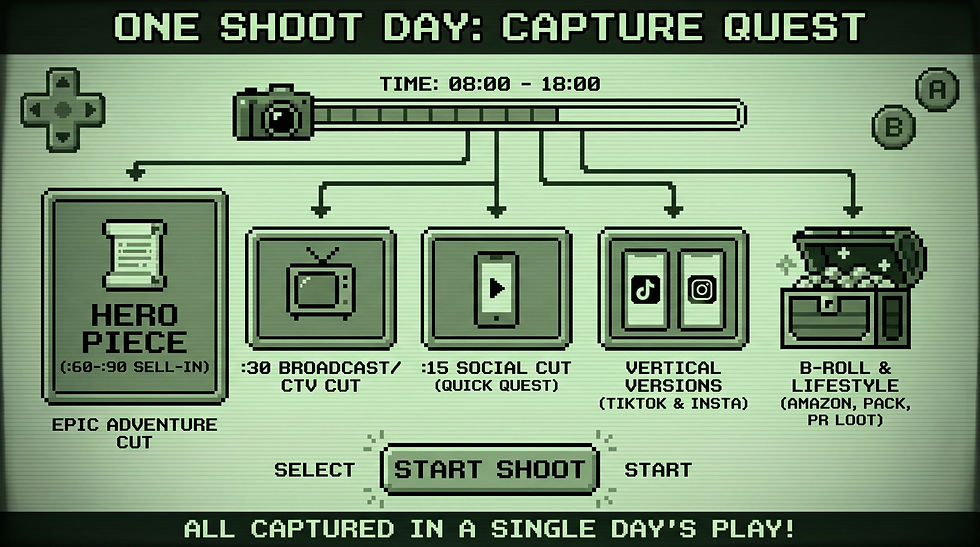
The most efficient thing you can do is plan your sell-in and sell-through content in the same production window. When you're already on set with your product, talent, and crew, capturing multiple versions costs a fraction of what two separate productions would.
In a single production day, we can typically capture:
A :60-:90 sell-in hero piece
A :30 broadcast/CTV cut
A :15 social cut
B-roll and lifestyle shots for Amazon, packaging inserts, and PR
This is the 'one team, full service' approach we built Enjoy New Media around — and it's why our clients consistently get more out of a single production budget than they expected.
When to Make Which Video
6-9 months before launch: Sell-in video for buyer meetings and trade shows
3-4 months before launch: Sell-through assets for retail partner approval
Launch window: Paid social, CTV, and Amazon listing videos live
Post-launch: Retargeting video content for consumers who visited but didn't convert
Next Steps
If you're planning a product launch and aren't sure which type of video to prioritize, our free 15-minute discovery call will give you a clear answer. We'll look at your timeline, your retail targets, and your consumer audience — and tell you exactly what you need and in what order.
Start a Conversation
Contact Our Team


Comments